

Paints
You can start with a small selection of colours and learn how they mix. You don’t need a huge palette to make a painting feel colourful.
Pans are compact and convenient, especially for small paintings.
Tubes make it easy to squeeze out fresh paint and mix larger amounts.
Paints also vary in price and strength. More expensive paints can contain more pigment, while budget paints may be a practical way to begin. Whichever you choose, learning how to mix and control the paint matters more than owning lots of colours.
My palette brings together colours I enjoy using, with room to make it your own.
See my palette recommendations
UK Links 🇬🇧
Sennelier Aqua Mini paints contain all the primary colours and some greens and brown. I use this set on a daily basis https://link.amazon/B04WDbakw
Winsor & Newton Cotman Sketcher Set is a great beginner set and the first paint set I bought and painted with https://link.amazon/A02uSgj9c
USA Links 🇺🇸
Sennelier Aquarelle 12 half pan set this set has many more colours and is a great starter set. Sennelier has rich smooth colours. https://link.amazon/B02WLxQ5k
Winsor & Newton Cotman Sketcher Set is a great beginner set. I started with this exact set https://link.amazon/B0iqWoWwz
A few helpful extras
You’ll also want water, something to mix paint on, and a cloth or tissue to lift extra water from your brush. These are simple tools, and you may already have suitable ones at home.
A simple starter setup
To begin, gather:
Watercolour paper you feel comfortable practising on
A small selection of paints
A size 2 and size 4 brush
A pencil and eraser
A waterproof fineliner, if you’d like to add ink
Water, a mixing surface and a cloth or tissue
You can add or change supplies as you learn what you enjoy painting. Start small, practise, and let your kit grow with you.
Watercolour Supplies for Beginners
The supplies you need to get started
Choosing watercolour supplies can feel confusing when everyone recommends something different. Here I’ll show you the materials I use, what each one does, and the pros and cons to consider when choosing your own.
You don’t need a cupboard full of supplies to begin. A few thoughtful choices are enough to start painting and build confidence.
Some links on this page are affiliate links. If you buy through them, I may earn a small commission at no extra cost to you. I only share products I use and genuinely recommend.
Paper
Paper has a big effect on how watercolour behaves. It can change how long paint stays wet, how colours blend and how the finished painting looks.
Cotton paper
It can absorb water evenly and give you more time to work with the paint. It usually costs more, so it may feel like a big investment while you’re learning.
More affordable papers
These let you practise without worrying about every sheet. They can behave differently from cotton paper, so some techniques—especially soft blends—may be less predictable.
I use different papers for different projects. The best choice is one that suits what you want to paint and gives you room to practise.
You may hear watercolour paper described as hot press, which has a smooth surface, or cold press, which has a softly textured surface that helps the paint settle into the paper. Everyone has their own preference, and the paper you enjoy may depend on what you’re painting.
You can buy artist-quality watercolour paper in large sheets from art shops such as Jackson’s, or choose a more convenient size in a pad from Amazon and other art shops.
My Tiny Visual Diary
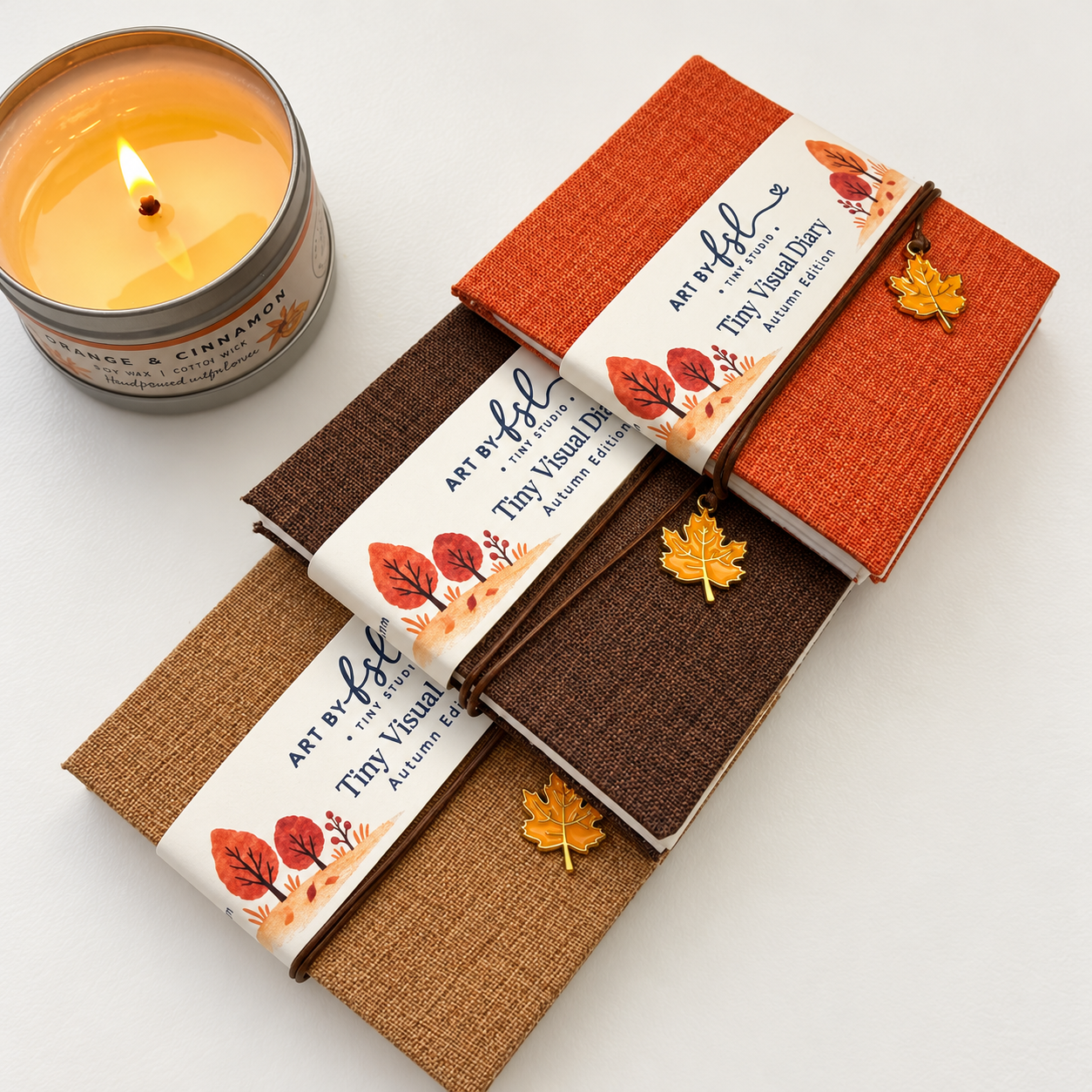
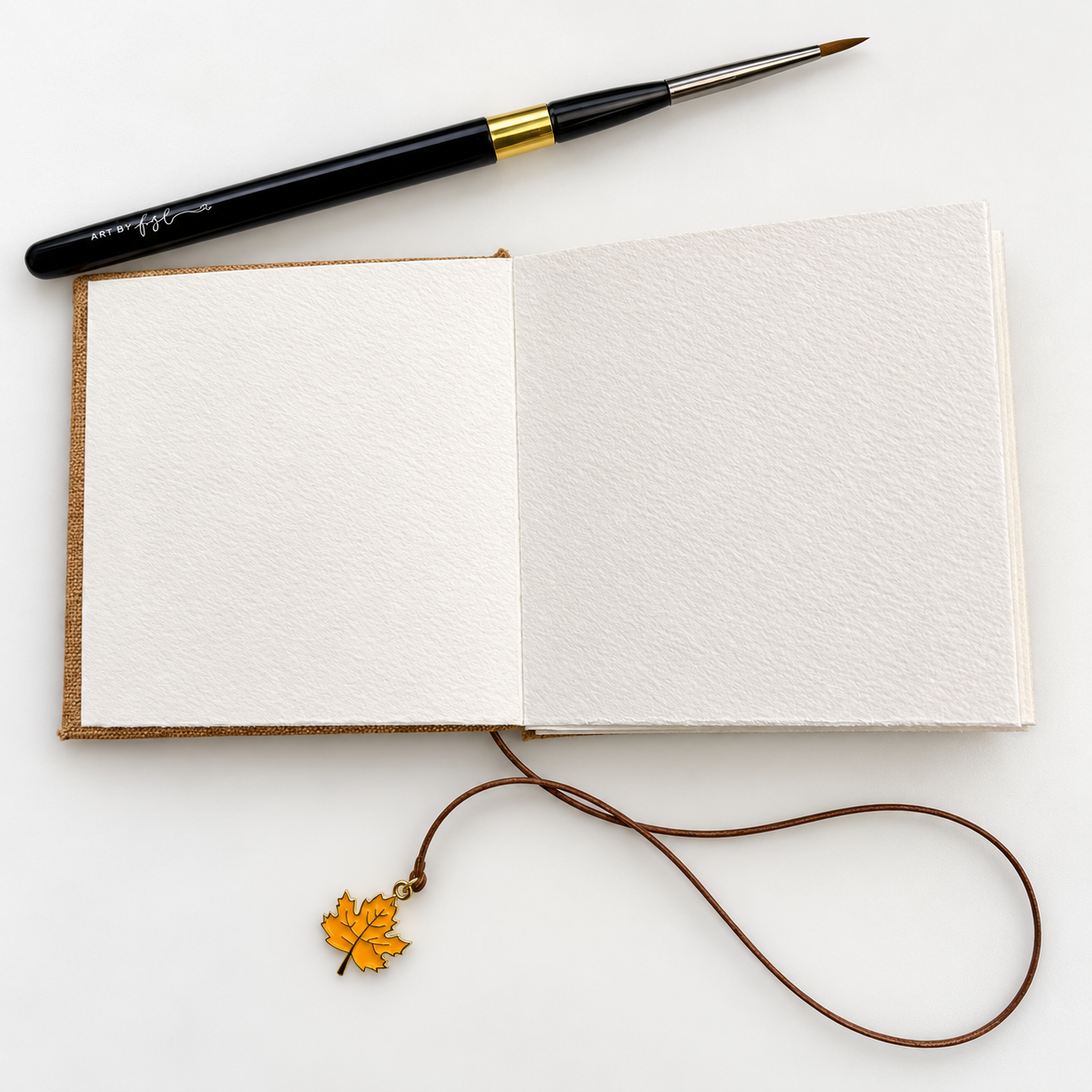
I created the Tiny Visual Diary so artists could experience painting on beautiful Arches cold-pressed, 100% cotton paper without having to buy a huge sheet. Its compact size makes it easy to carry with you and gives you a small, welcoming space to begin—helping painting feel less overwhelming and easier to fit into your day.
UK Links 🇬🇧
Tiny Visual Diary is made from Arches 100% cotton paper in a convenient concertina book https://www.artbyfsl.com/tiny-shop/tiny-visual-diaries
Arches Cold pressed high quality paper 100% Cotton paper. This is in my opinion the holy grail of papers. I love how watercolour lays down on this paper and texture really comes to life. https://amzn.to/4siDXFU
Fuumuui 100% cotton this is ore of a budget paper but really good quality. You can use my code FAYELOW30 at fuumuui.com to get a 10% discount on their products.
USA Links 🇺🇸
Tiny Visual Diary is made from Arches 100% cotton paper in a convenient concertina book https://www.artbyfsl.com/tiny-shop/tiny-visual-diaries
Arches Cold pressed high quality paper 100% cotton paper. The holy grail of papers and so luxurious https://link.amazon/B06iJcvko
Fuumuui 100% cotton paper more student friendly. Remember to use code FAYELOW30 at fuumuui.com
Brushes
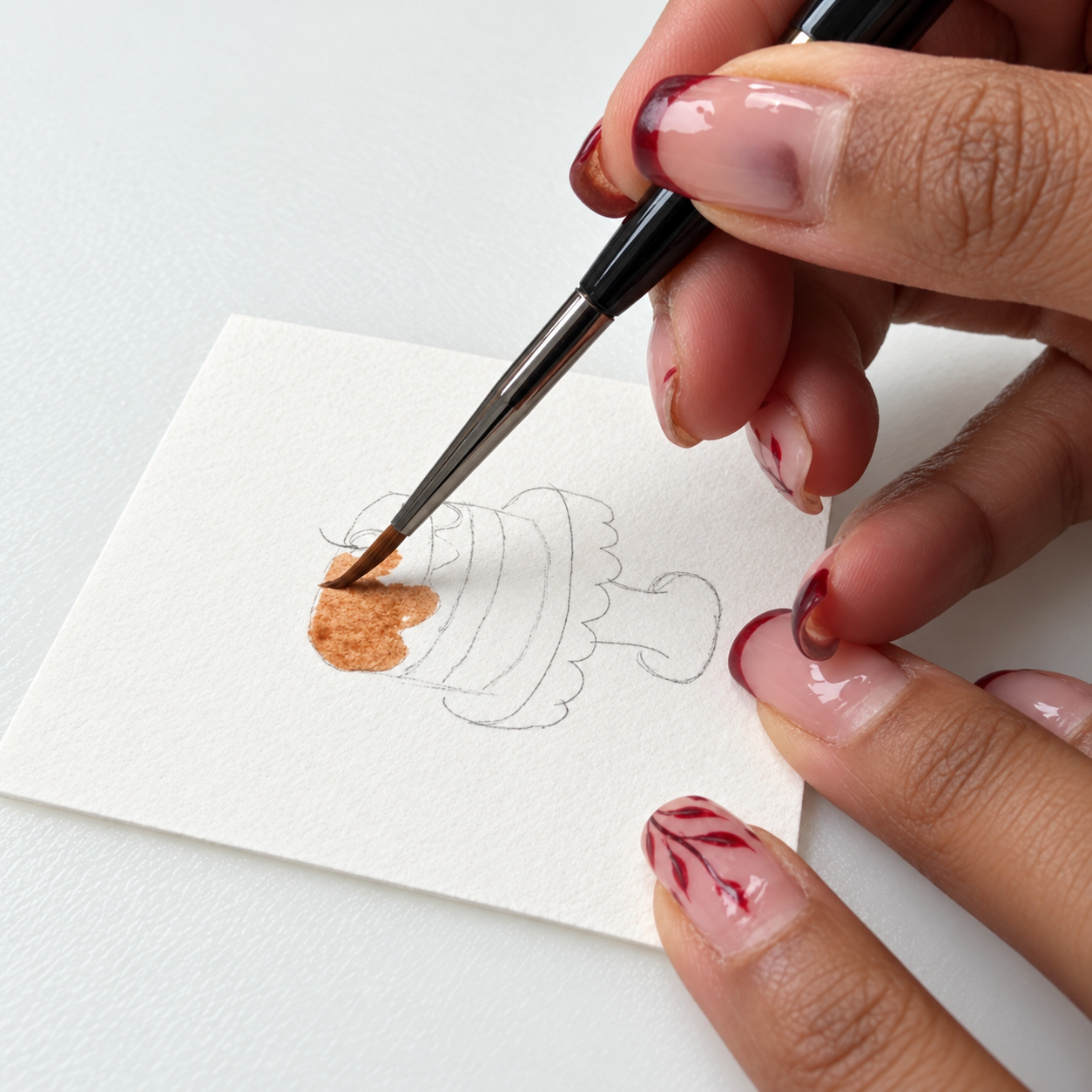
A couple of versatile brushes can take you a long way. I use size 2 and size 4 brushes for small paintings: one gives me a little more coverage, while the other is useful for finer marks and details.
A good brush should hold water and come to a useful point. You don’t need a large collection of specialist shapes to get started. I really like the Princeton range of brushes and I've recently been using the Neptune brushes for my work. They are synthetic soft brushes and take a bit of getting used to but do produce great results.
I’ve tried and tested many brushes, but the one I keep coming back to for my own artwork is the Art by FSL Size 2 Travel Brush. It’s synthetic and comes to a lovely point, making it versatile enough for painting larger areas and adding finer details.
See the brushes I use
UK 🇬🇧 Links
Art by FSL size 2 Travel Brush https://www.artbyfsl.com/tiny-shop/p/size-2-travel-watercolour-brush
Princeton Neptune Round size 4 brush https://link.amazon/B0ctXXwB4
USA 🇺🇸 Links
Art by FSL size 2 Travel Brush https://www.artbyfsl.com/tiny-shop/p/size-2-travel-watercolour-brush
Princeton Neptune Round size 4 brush https://link.amazon/B0gpYyE8N
Pens and drawing tools
A pencil and eraser are useful for planning a simple sketch. If you prefer, you can also use a traceable to get started with the painting.
A waterproof fineliner can add outlines or small details. Check that it’s waterproof, and let the paint dry before drawing over it so the ink doesn’t smudge.
After many years as a graphite artist, I’ve tried and tested plenty of drawing supplies and know which ones I return to time and again. In my opinion, Faber-Castell makes high-quality products, and below I’ve listed the exact drawing tools I use every day.
Here are the exact drawing tools I use and highly recommend
UK Links 🇬🇧
Sakura Pigma Micron Black 0.1 fineliner https://amzn.to/46p4zvC
Faber Castell 9000 2H pencil https://amzn.to/4yyyRrx
Tombow Mono Zero eraser https://amzn.to/46ltPmn
Faber Casell Dust Free Eraser https://amzn.to/4xpMOae
Faber Castell Putty eraser https://amzn.to/4Adc7PF
My artscape graphite paper https://link.amazon/B0fyfAZvX
USA Links 🇺🇸
Sakura Pigma Micron Sepia 0.1 fineliner https://link.amazon/B06LdDvM2
Faber Castell 9000 2H pencil https://link.amazon/B0f6pqemv
Tombow Mono Zero eraser https://link.amazon/B0bvD6Sp4
Faber Casell Dust Free Eraser https://link.amazon/B01Cgfszq
Faber Castell Putty eraser https://link.amazon/B06iJcvko
My artscape graphite paper https://link.amazon/B0a3axplO